Open Letter to Sweden’s New Parliamentary Majority: Condemning the Blockade Against Cuba Is Not Enough
por Henrik Hernandezpublicado en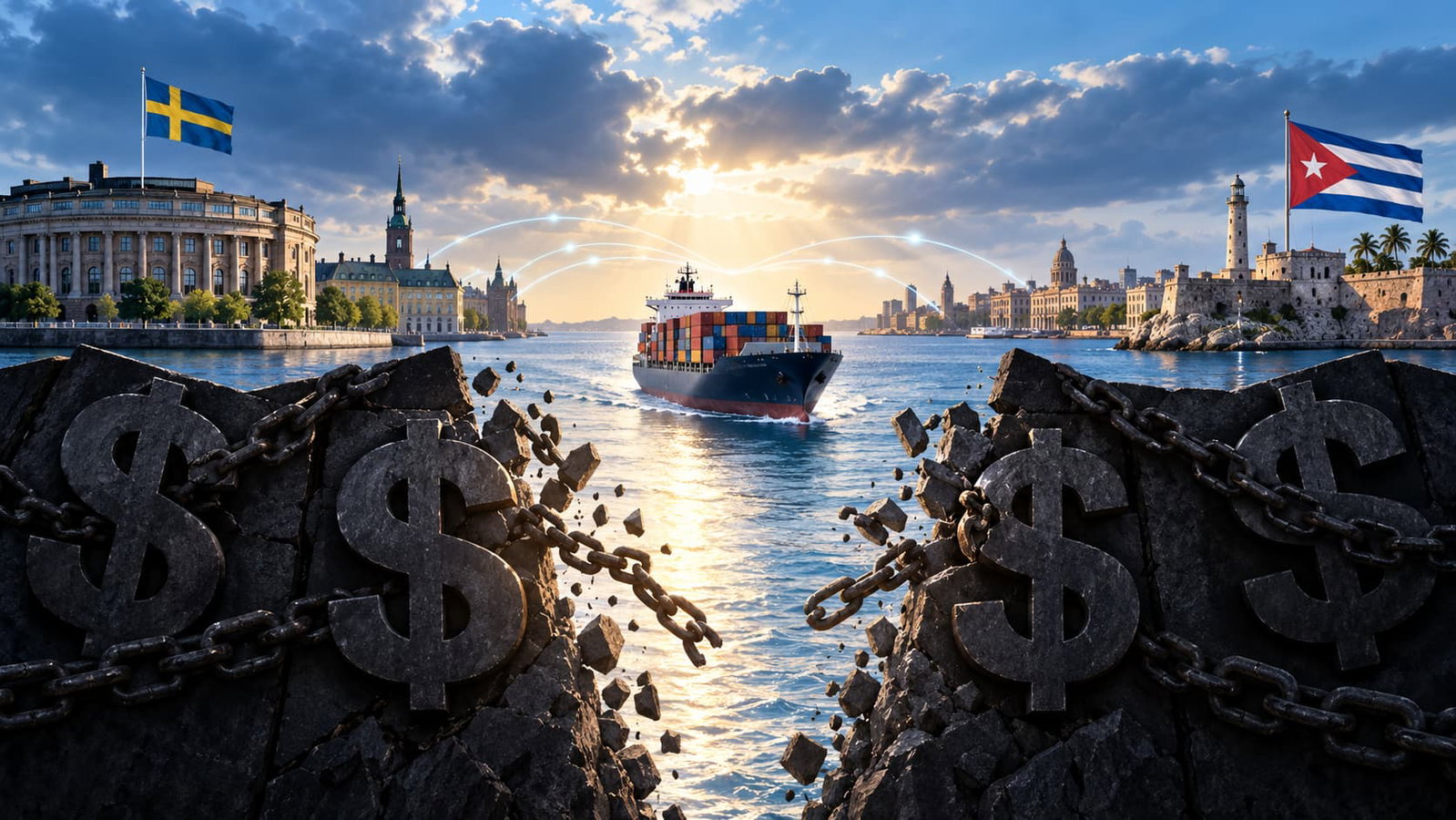
This open letter is being published simultaneously in Swedish, Spanish and English to facilitate its circulation and make its content accessible to readers in different countries.
Addressed to:
Magdalena Andersson, Leader of the Swedish Social Democratic Party
Nooshi Dadgostar, Leader of the Left Party
Amanda Lind and Daniel Helldén, Spokespersons for the Green Party
Elisabeth Thand Ringqvist, Leader of the Centre Party
Dear Magdalena Andersson, Nooshi Dadgostar, Amanda Lind, Daniel Helldén and Elisabeth Thand Ringqvist,
The election result has given your four parties a combined total of 176 seats and therefore a majority in the Swedish Parliament. This parliamentary situation places a particular responsibility upon you to defend Sweden’s right to pursue an independent foreign and trade policy grounded in international law.
I therefore urge you to translate Sweden’s declared opposition to the United States’ economic, financial and commercial blockade against Cuba into concrete and binding political action.
Sweden and the European Union have repeatedly opposed the blockade and the extraterritorial application of United States legislation. Nevertheless, payments, transportation, insurance, trade and other economic relations with Cuba can still be blocked, delayed or obstructed by banks, financial institutions, companies, shipping companies and insurers operating in Sweden.
When such measures are taken to avoid United States sanctions or reprisals, decisions made in Washington acquire greater practical significance than Sweden’s declared policy. Swedish and foreign actors under Swedish jurisdiction thereby participate in implementing a blockade that Sweden officially claims to oppose.
This concerns more than Cuba. It is also a matter of Swedish sovereignty. If a foreign state can use sanctions, fines and threats of exclusion to determine which economic relations actors in Sweden dare to maintain, Sweden’s actual capacity to pursue an independent policy is restricted.
For me, this is neither an abstract matter nor merely an issue of trade policy. My own experiences have shown me how the blockade and fear of United States reprisals have concrete consequences for private individuals in Sweden as well. They also create a deterrent effect that causes people to hesitate before carrying out entirely lawful payments or other economic transactions connected to Cuba.
Council Regulation (EC) No 2271/96 and Sweden’s supplementary Act 1997:825 are intended to protect against the effects of certain extraterritorial legislation. Swedish law also provides for fines or imprisonment of up to six months for certain violations.
However, legal protection that has no practical effect is insufficient. Merely referring to the existing legislation is therefore not an answer to this letter. The relevant questions are how the provisions are applied, who supervises compliance, which violations have been investigated and which penalties have actually been imposed.
I therefore call upon the Social Democratic Party, the Left Party, the Green Party and the Centre Party to:
- require a public account of how the EU Blocking Statute and Act 1997:825 have been applied in Sweden, which authority is responsible for supervision, how many suspected violations have been reported and investigated, and which decisions and penalties have resulted from those cases;
- conduct an independent investigation into the extent to which banks, financial institutions, companies, shipping companies and insurers operating in Sweden have rejected, stopped, delayed or otherwise obstructed payments, transportation, insurance, trade, investment or other economic relations with Cuba because of United States sanctions;
- strengthen and supplement Swedish legislation wherever the existing protection is insufficient, while ensuring that violations result in meaningful and effective legal and financial penalties;
- introduce an obligation requiring banks, financial institutions, companies, shipping companies and insurers that reject, stop, delay or otherwise obstruct a payment, shipment, insurance arrangement or other transaction from or to Cuba to notify the affected party in writing of the measure and the reasons for it within 72 hours of the decision being made. The obligation to provide written notification must also apply when a transaction is effectively stopped or withheld without a formal decision. In such cases, the deadline must run from the moment the transaction was stopped or withheld;
- require the written notification to identify the specific provision of Swedish or European Union law, or the binding decision of a Swedish authority, upon which the measure is based. General references to internal policies or risk assessments must not be sufficient to avoid judicial examination of whether the measure is, in reality, based on extraterritorial United States legislation;
- give the affected party the right to have the decision or measure reviewed by a Swedish court, request the removal of any unlawful obstacle and obtain compensation for the financial damage caused by the decision or measure;
- guarantee publicly funded legal assistance for private individuals and non-profit organisations and protect them from liability for the opposing party’s legal costs, except in cases of manifest abuse of the right to bring proceedings. If a bank, financial institution, company, shipping company or insurer is found to have acted contrary to the EU Blocking Statute or Swedish law, the responsible actor must reimburse the affected party for all reasonable legal costs and proven financial damage;
- remove the obstacles restricting free trade and free economic relations between Sweden and Cuba, while protecting actors exposed to United States threats or reprisals because they trade with Cuba in accordance with Swedish law, European Union law and international law;
- work within the European Union for a stronger and more effective regulatory framework preventing European companies from submitting to the extraterritorial sanctions of third countries.
This issue is not about Sweden’s assessment of Cuba’s political system. No such assessment gives Sweden the right to accept that a foreign power obstructs Cuba’s economic relations with the rest of the world or determines how actors under Swedish jurisdiction must behave.
Cuba has the same right as every other sovereign state to conduct trade, receive payments, enter into contracts, insure shipments and maintain normal economic relations with other countries. That right does not depend upon political approval from the United States, Sweden or any other state.
Sweden’s responsibility is not to explain or justify the blockade, but to ensure that it is not implemented within Swedish jurisdiction.
The Social Democratic Party should defend Sweden’s foreign-policy independence and the international solidarity that has long formed part of the party’s tradition.
The Left Party should translate its principled opposition to economic coercion, unilateral sanctions and the extraterritorial exercise of power by major powers into concrete legislative initiatives.
The Green Party should draw attention to the blockade’s consequences for people’s daily lives, food supplies, energy systems, climate adaptation and sustainable development.
The Centre Party should defend the right of Swedish companies to engage in free trade without submitting to the unilateral decisions of a foreign state.
Your parties hold different positions on many issues, but you should be able to agree on one fundamental principle: Swedish policy must be decided in Sweden and must not be shaped by fear of United States economic reprisals.
It is time to move from repeated political condemnations to concrete and binding measures. Sweden’s opposition to the blockade against Cuba must have a real impact on trade and economic relations between our countries.
I therefore request a concrete response from each of you to the following questions:
- Which Swedish authority do you believe should be responsible for actively supervising compliance with the EU Blocking Statute and Act 1997:825?
- Are you prepared to support the requirements for written notification and justification within 72 hours, judicial review, legal assistance and compensation for those affected by an unlawful decision or obstacle?
- What concrete measures are you prepared to take to ensure that Sweden’s political opposition to the blockade also has genuine practical significance?
Yours sincerely,
Henrik Hernandez
Tocororo Cubano
Comentarios